
You Don’t Have a Lead Problem. You Have a Trust Problem.
Lead generation is a tactic. Trust is the condition that makes it work.
That distinction gets lost quickly when growth feels slow. More leads sounds like a solution because it’s visible, measurable, and easy to act on. But teams that chase volume without examining what’s happening to the leads they already have often find themselves running harder to stay in the same place.
The more interesting question isn’t “How do we get more?” It’s “Why aren’t the right buyers saying yes?”
Why Trust Is Harder to Build Than It Used to Be
B2B buyers are further along in their decision-making than most teams realize. Today’s B2B buyer has already done significant research before anyone from your team enters the picture. They’ve read reviews, consulted peers, compared options, and formed a shortlist without ever filling out a form or taking a call.
That independence is good news for buyers. For sellers, it raises the stakes on every signal you’re putting out. If the content, presence, and proof points a buyer finds during that independent evaluation phase don’t hold up, the credibility gap opens before the conversation even starts. More lead volume in that environment doesn’t close the gap. It simply accelerates the rejection.
How to Tell Which Problem You’re Dealing With
The symptoms of a trust problem and a lead problem can look almost identical on the surface, which is why misdiagnosis is so common. What separates them is where in the process things break down.
When deals stall after a strong first call, that’s worth examining. A prospect who shows up engaged and then goes quiet isn’t necessarily a bad lead. They may have liked what they heard but couldn’t find enough outside that conversation to feel confident moving forward.
The same pattern applies to proposals that go quiet after initial interest, prospects who consistently engage with your content but never initiate contact, and pipelines that show healthy traffic but low conversion. These aren’t volume problems. They’re signals that something in the credibility chain needs attention. Buyers who are close to a decision are doing their due diligence, and what they find isn’t quite closing the gap.
What Trust Is Really Made Of
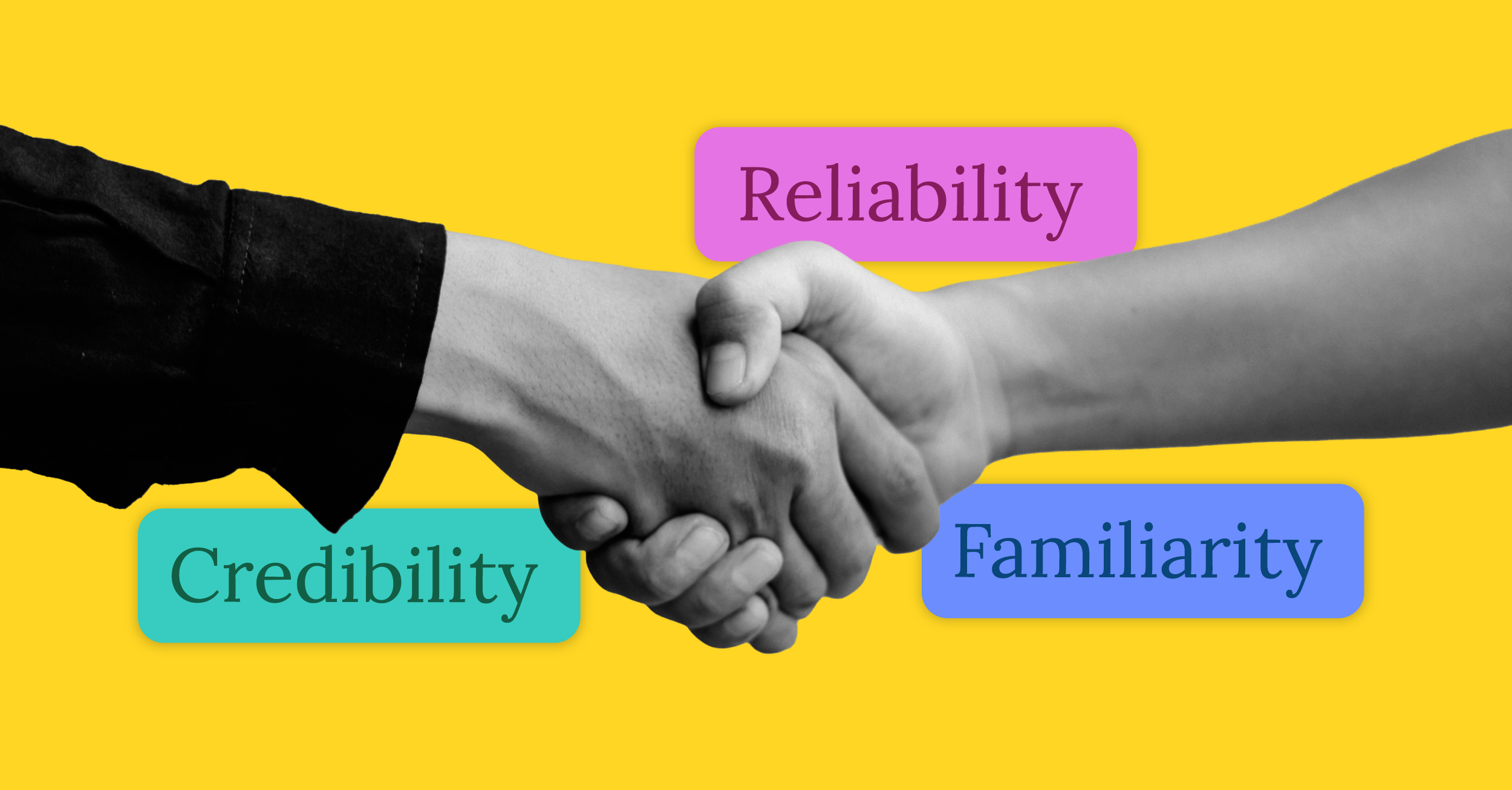
B2B trust isn’t soft or abstract. It comes down to three components, and most companies tend to invest heavily in one while giving the other two less attention than they deserve.
Credibility is what buyers assess before they contact you. It’s built through the quality of your thinking, the specificity of your expertise, and the degree to which your content reflects a clear understanding of their world. A website that describes services without demonstrating perspective, or a LinkedIn presence that hasn’t been updated in months, doesn’t fail because it looks bad. It fails because it gives buyers nothing to believe in.
Reliability is harder to communicate before a relationship starts, but it shows up in the right places. It’s demonstrated through case studies that describe the actual work, not just the headline outcome; testimonials that extend beyond a single sentence; and clear explanations of how engagements run and what clients can expect along the way. Buyers making high-stakes decisions want evidence that you’ve done this before and that the experience matched the promise.
Familiarity is the component most often skipped because it takes the most time to build. It develops when buyers encounter your name consistently across LinkedIn and industry conversations, engage with content they return to over time, and arrive at a first call already familiar with your thinking and more inclined to trust you. Buyers who discover you for the first time during an active evaluation must build that trust within the sales process, which is both slower and more difficult.
Companies that earn the most trust tend to be consistent across all three components. That consistency is usually what buyers feel, even when they can’t name it.
How to Build the Trust Infrastructure
Most of the work happens before a buyer ever reaches out. Being deliberate about those early touchpoints is where it counts.
Thought leadership with a clear point of view is one of the strongest starting points. Content that takes a position is far more useful than content that simply covers the bases. Buyers remember the piece that said something they hadn’t heard before; recaps of conventional wisdom are forgettable by design.
Social proof matters, but only when it tells a story. Logo walls and one-line testimonials do little to move a skeptical buyer. A case study that walks through the problem, the process, and the outcome gives buyers something to see themselves in. The challenge feels familiar, and the result feels worthwhile.
Consistency across touchpoints is where many companies quietly lose ground. When the website, LinkedIn presence, sales conversations, and proposals all tell slightly different stories, buyers notice—even if they can’t articulate why. The result is a vague lack of confidence that rarely comes with a clear explanation.
Showing up before the ask is the longest game and the one that pays off most over time. Buyers who find you useful before they need you enter the evaluation already leaning your way.
Start with the Audit, Not the Campaign
Start by examining what a buyer finds when they research you independently. Review your website without the benefit of internal context. Read your LinkedIn profile as if you’re encountering your company for the first time. Evaluate your most recent case study and ask whether it tells a story or simply lists deliverables.
Coherence matters more than perfection. Buyers aren’t looking for a flawless brand presence; they’re looking for one that holds together and feels credible at every touchpoint. When everything buyers encounter points in the same direction—a team that understands its space, delivers on its promises, and has done this before—conversion follows.
At Hencove, we help teams identify where trust breaks down and how to close those gaps. If that sounds like what you’re working through, reach out to see how we can help you.