
Give Your Brand a Face: The Case for B2B Mascots
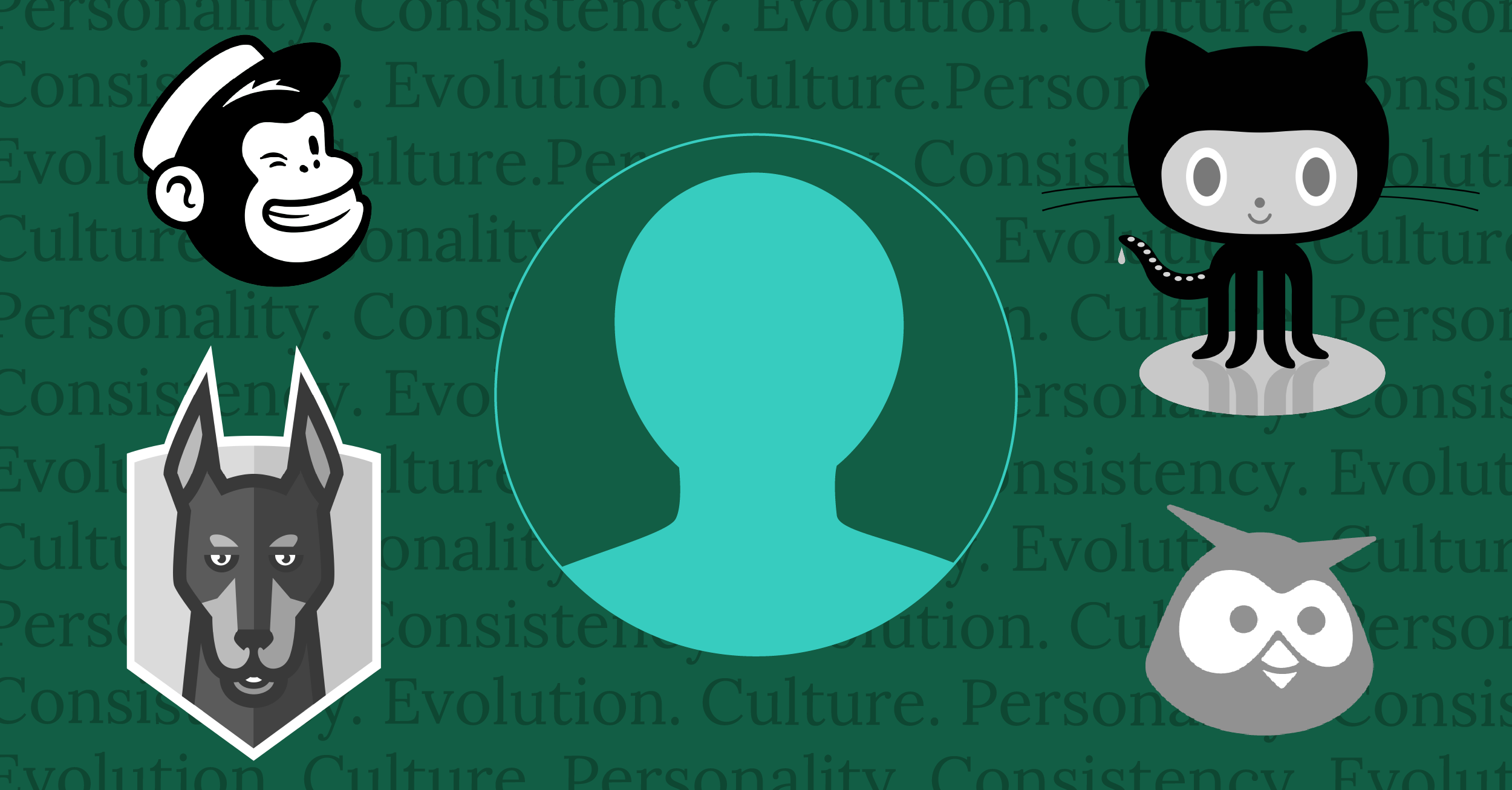
There’s a reason some B2B brands are instantly recognizable while others feel forgettable. It’s about personality—their ability to humanize complex concepts, foster emotional bonds, and blend professionalism with playfulness. That personality doesn’t come from a tagline alone, or a carefully chosen color palette. It comes from something more human: a voice, a point of view, a presence that people can recognize and return to.
One of the most underused tools for building brand personality in the B2B space is also one of the oldest: the mascot. According to research by System1, campaigns featuring mascots see 27% more new customers and 30% higher profitability on average, along with a 25% improvement in brand recall. The data makes a strong case. And increasingly, B2B brands are starting to act on it.
Why Characters Work
Consumer brands have known for decades that a recognizable character can do a lot of the emotional heavy lifting that a product description simply can’t. Consider the GEICO Gecko. Martin may not have the power to change the price of car insurance, but his charming accent and catchy tagline do give the brand its staying power. He’s funny, endearing, and makes auto insurance, a complex financial product most people would rather not think about, feel approachable and engaging.
Characters tend to engender an emotional connection. They bring a brand to life, shaping how buyers perceive and remember it over time. A face, even a fictional one, gives people something to latch onto in ways that make the brand memorable—the kind of memorable that a logo or tagline rarely achieves on its own.
Of course, plenty of mascots have failed to earn their keep. But when the tactic pays off, it does so in ways that are hard to replicate by other means.
B2B Has Always Done This
Mascots in B2B aren’t a new idea. Microsoft’s Clippy, love him or hate him, was one of the most recognizable software characters of the 1990s. Likewise, GitHub’s five-tentacled feline, Octocat, has been a beloved fixture of the developer community since the early days of the platform, becoming a cultural symbol that goes well beyond a logo. Even IBM leaned into character-driven branding through the 1960s and 70s, infusing the massive tech enterprise with a welcome sense of humanity and playfulness.
Far from a tacky gimmick or juvenile play, each of these mascots represents a deliberate bet on personality as a brand asset. For a stretch, a lot of B2B marketing shifted toward a more stripped-back aesthetic: clean lines, neutral palettes, and an emphasis on authority over warmth. The logic made sense: in categories where buyers need to trust you with serious decisions, projecting credibility felt more important than projecting personality. That made sense for many brands, and it still does for some. But it also created an opening: in a sea of similar-looking brands, the ones with a distinct personality started to stand out more, not less.
The Brands the Leaned In
When executed well, B2B mascots can provide a powerful branding tool. A few recent examples show what’s possible when a B2B brand commits to a character.
Snyk’s Patch launched in 2022 in a cybersecurity market where most competitors were leaning hard into urgency and technical authority. Introducing a caped character into that space was a deliberate choice to feel different. It helped Snyk build recognition in a category that can feel impenetrable to newcomers.
Hootsuite’s Owly has existed for years, but the 2022 refresh gave the character a much more prominent role in the brand. When their CMO described Owly as “the gold-hearted rebel leading our customers,” it signaled a shift from mascot as decoration to mascot as voice. In a crowded social media management market, that kind of distinct personality can help a brand register.
These newer entrants aren’t operating in a vacuum. They’re part of a longer tradition. Alongside GitHub’s Octocat, Mailchimp’s Freddie has been doing consistent, visible work for years. What these characters share is longevity: they’ve been showing up long enough, and consistently enough, that they’ve become genuinely inseparable from the brands they represent. That’s the model newer brands are increasingly looking to emulate.
Where It Works and Where It Doesn’t
A mascot works best when it has something to express. The first question worth asking is whether your brand has a defined personality to begin with. If your team could describe your brand’s voice consistently and specifically, a character can amplify that. But it’s worth saying plainly: not every brand will be better off with one. A mascot adopted because it seems like a fun idea, or because a competitor has one, is a character without a job. Before jumping on the bandwagon, it’s worth asking whether there’s something real for the character to express. If the description varies depending on who you ask, there’s some foundational work to do first.
Figuring out who you are and what you have to say is the first and most important step in building a brand that lasts. More than a clever character or a sticky tagline, what buyers respond to is a strong, authentic narrative. A mascot can be a powerful extension of that story. But it can’t replace it.
Category context matters too. Brands operating in spaces where buyers are making high-stakes decisions (think healthcare, legal software, or financial compliance) need every brand element to reinforce trust and credibility. In many cases, adding a cartoonish, playful mascot to that mix can undermine a brand’s positioning and create tonal dissonance. A character can still work in those spaces, but it has to earn its place carefully and show up in a way that feels aligned with the seriousness of the decision. It’s not an automatic no, but it does require a measured approach.
Where mascots tend to find the most natural footing is when a brand has a conversational tone, a community of users who identify with the product, or a crowded category where most competitors look and sound the same. In those situations, a character has room to carry your voice into the places where personality is most likely to slip away: the email footer, the onboarding flow, the error page, the event booth, and everywhere in between.
Four Things to Get Right
If you are considering adopting a mascot, execution matters as much as the idea.
Start with personality, not aesthetics. A character that looks great but doesn’t have a defined point of view tends to fade quickly. Before any design brief gets written, it’s worth figuring out what the mascot believes, how it communicates, and what it would never do. The visual follows from that.
Plan for consistency. A mascot that shows up in one campaign and disappears doesn’t have much chance to build recognition. The brands that see the most value from their characters use them across email, social, product, events, and swag over time. Sustained presence is what makes a character feel like part of the brand rather than a one-off creative choice.
Let it evolve, but protect the core. Characters can and should grow with a brand. Owly looks different now than it did in 2014. What tends to undermine a mascot is reinventing it so frequently that audiences never get the chance to build a relationship with it. The core personality needs enough stability to outlast individual campaigns.
Make sure it reflects your internal culture, not just your external brand. The best mascots don’t just speak to customers. They resonate internally, too. If your team takes a collaborative, playful approach to the work, a mascot can be a natural extension of that. If it feels like a costume your company is putting on, buyers tend to notice. The character works best when the people behind the brand identify with it.
So, Is It Time?
Run through the questions above. Does your brand have a clear personality? Is your category one where a character has room to breathe? Do your people not take themselves too seriously? If the answer to most of those is yes, a mascot is probably worth a serious conversation.
More B2B brands are exploring mascots because those that have invested in characters have shown it can pay off. Not just in brand awareness, but in the kind of recognition that keeps you top of mind when a buyer is finally ready to make a move. In a market where a lot of brands are starting to look alike, a character that represents who you are is one of the hardest things to copy.