
It's Not a Cookie, It's a Newton
There's an old question for testing how deep your passion for something runs: what's the work you'd do for free?
I can’t drive past a billboard without asking, “Does this work?” I can’t ignore the typos on a restaurant menu. And I can’t read a company statement without questioning the strategy. I’m fortunate to have a passion that is also a profession. Communications is just part of my DNA. Sometimes I get paid for it.
Rarely does this passion intersect with my other passion in life: Newtons. Or, as you probably call them Fig Newtons. (More on that name in a minute.)
Whether that translates into your good fortune in reading this blog post is up to you.
The History of the Newton
In the world of historic food brands, Newtons ranks higher than you might imagine. Newtons launched in 1891, three years before the now-famous chocolate company of Lancaster, Pennsylvania, The Hershey Company.
Created by a Massachusetts bakery called the Kennedy Biscuit Company, the fig-filled bar rolled off the assembly line in its very first year. Its first brand decision was naming it after the nearby Boston suburb. Seven years later, in 1898, Kennedy Biscuit merged with several other regional bakeries to form the National Biscuit Company, the business we know today as Nabisco.
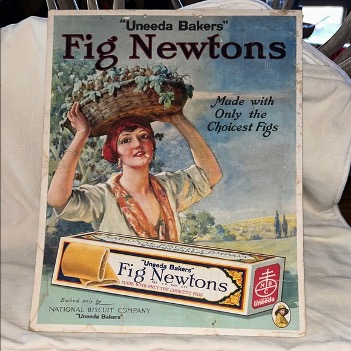
Its early branding was plain, simple, and fig-forward. The brand we associate today — the yellow box, the fig bar front and center — was likely well established by the 1950s. And for decades, Newtons were largely unchanged.
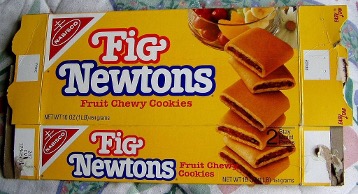
The Newtons Mic Drop: Bye-Bye, Fig
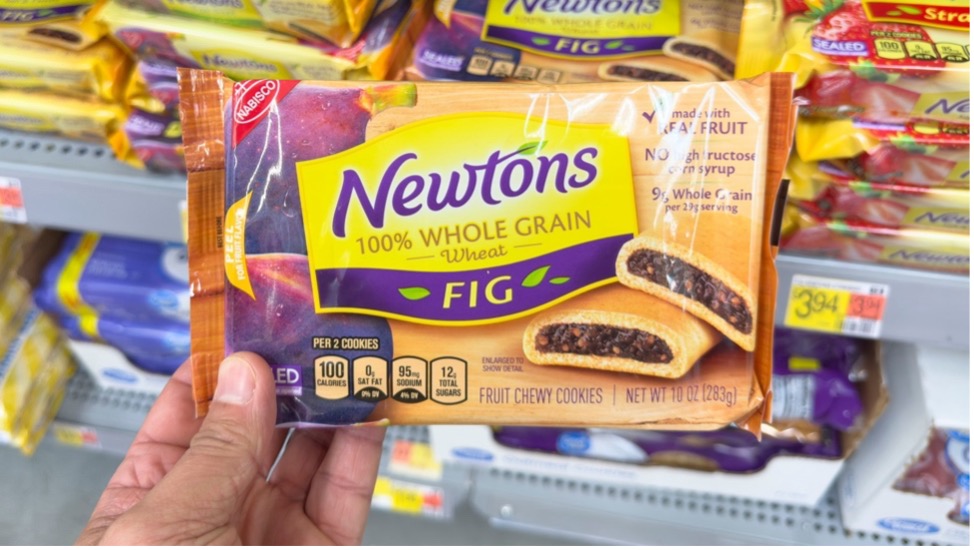
And while the visual branding has remained largely unchanged, the name itself has gone through a few iterations. Originally, the bars were called Newtons. Then in 1914, the name was changed to Fig Newtons, which is what everyone knows them as today. Then, in 2012, Fig Newtons dropped the fig and became just Newtons. The change came as Nabisco was being folded into its parent company, Mondelez. But instead of inventing something new, the company reverted to the snack bar’s original name.
So, why the change? In the 2010s, the company had expanded the product line to include flavors beyond fig: strawberry, raspberry, blueberry, and cinnamon apple. The word “fig” had become a constraint on how customers understood the product. In case you were wondering, I fully support a broad product line, though I will always be a classic fig consumer. I also see the logic of separating the Newtons name from the polarizing fig.
The same tension shows up constantly in B2B. You knew I had to tie this back to my day job, right? Companies get built around the one product that wins their early adopters, and eventually the name locks it into that original category. DocuSign, Elasticsearch, and PagerDuty are all companies that launched with a company name tied to a specific product or service. Over time, these companies expanded their offering and were left with a choice around what do with the company name. Elasticsearch renamed, while the other two did not.
In the case of the fig bars, the company chose to remove “fig” and retain only Newtons. As part of the decision, a company executive argued that the fig made the brand harder to grow, while a separate marketing consultant said that fig had come to read as a fruit for grandparents rather than a fruit anyone got excited about.
The move to adopt the product’s original name, Newtons, is also reflected in their design decisions. When they changed the name, they changed very little visually. The box stayed yellow. The bar stayed rectangular. The product had decades of brand recognition, and that was worth protecting.
So, the question to ask is: did it work?
Yes, and no. The instinct to protect the brand’s legacy was smart. The yellow box had decades of recognition behind it, and there was little reason to throw that away. But the company may have misjudged which part of the legacy mattered most.
For several generations, the bar had been known affectionately as Fig Newtons. That is their legacy. It’s rare to have a snack food today that a child can say, “Oh my grandparents loved this snack when they were kids.” But going with Newtons isn’t reverting to that childhood. It’s reverting to a few generations even before that — a generation that is no longer eating snacks. In other words, the brand decision might have gone too historic.
Fourteen years later, my highly unscientific research says otherwise. No one in my recent focus groups knew that the name had changed. So, if everyone is still calling them Fig Newtons, why change the name at all?
Changing the name may have made sense in the board room, but it didn’t translate to the aisle.
Round Two: The Fig Fights Back
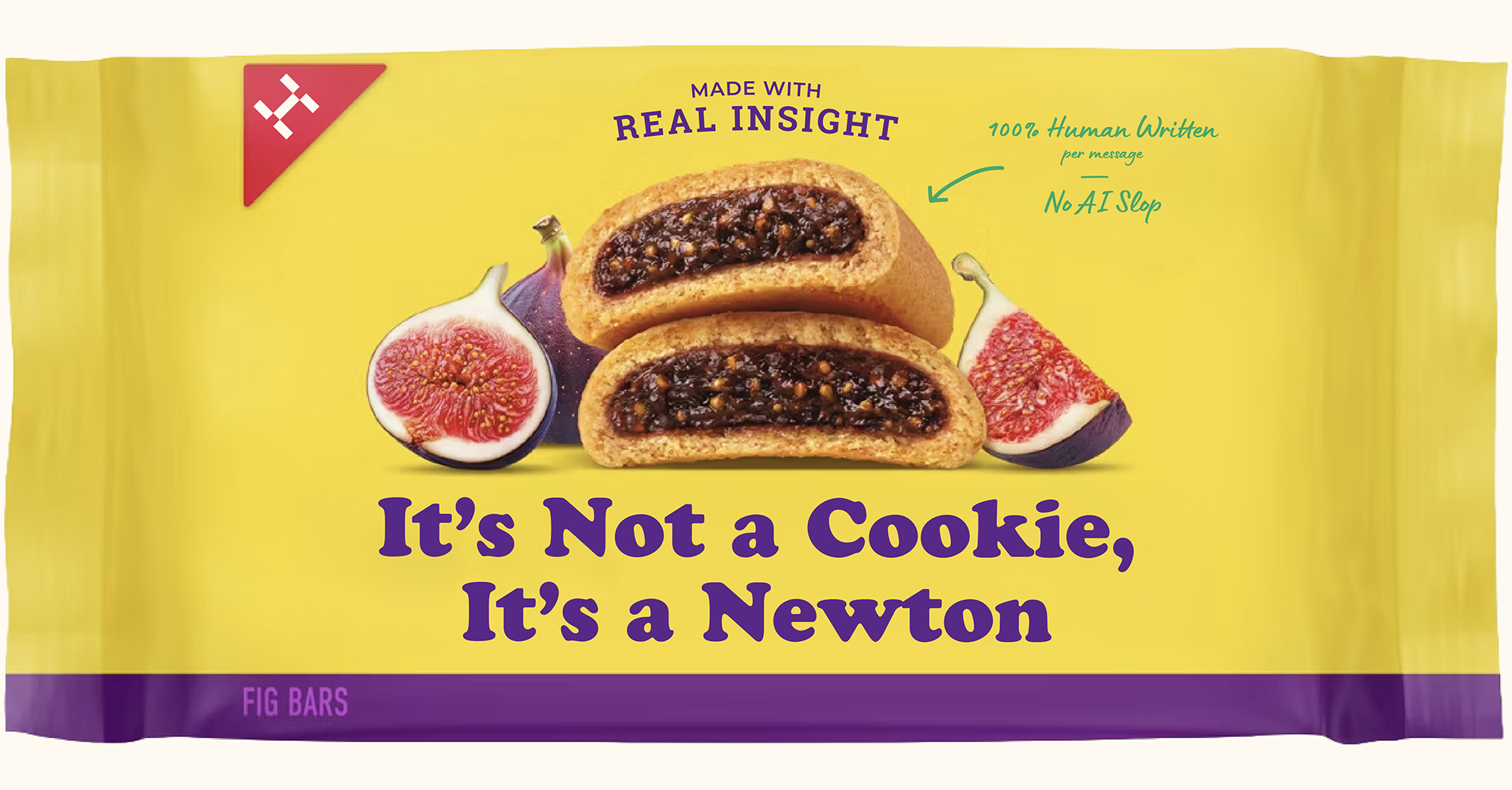
Fast forward to 2026, and the reason for this blog. Newtons rolled out its first real packaging refresh in a long time, and as someone who spends his working life thinking about how brands show up, I couldn't just eat the bar and move on.
This time, nothing about the story changed, and the recipe remains constant. What changed is the box. The updated packaging features bold graphics and enlarged imagery of the iconic bar with real fig filling and celebrates the brand's heritage while introducing the cookie bar to a new generation. Or so their executives say.
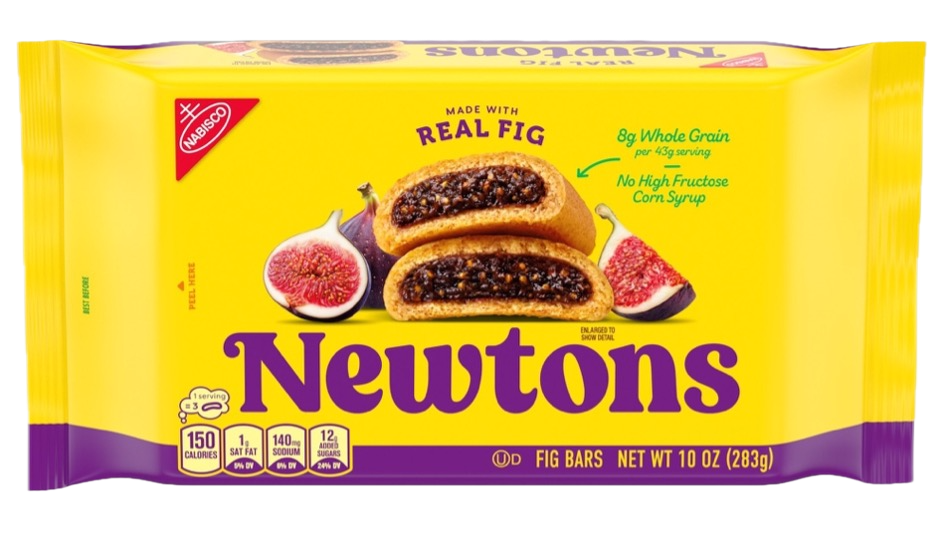
Basically, the fig bar itself, formerly a background player tucked into a corner of the box, is now center stage. In the tech world, Apple’s product-forward brand visuals come to mind.
For Newtons, the fig bar isn’t just present in the brand identity. It’s doing most of the branding work. The overhaul goes beyond just a bigger fig bar, too. The wordmark was redrawn, and the palette picked up a new purple accent alongside the yellow. Is the purple an homage to the fig? The brand won’t say.
A Case Study I Didn't Ask for
An iconic brand touching its packaging is a nerve-racking moment. You've got decades of shelf recognition built entirely on muscle memory. Somebody grabs that yellow box on autopilot, the same way I grab a specific brand and style of peanut butter without reading the label. Mess with the wrong element and you don't lose new customers, you confuse brand loyalists.
The move here is less about reinventing the brand than fixing its hierarchy. Keep the equity: the yellow, the name, and the fig. Then get loud about what's good: the bar, the real fruit, and the "yes this is still delicious" of it all.
We see this pattern in the B2B world. Many companies have something differentiated: an impressive client outcome, a founder's decades of expertise, or a proprietary technology. Yet their marketing often leads with broad positioning language that could belong to almost anyone in the category.
In this case, Newtons had 130 years of "people love this fig bar" sitting right there. For years, the brand whispered it. Now it's shouting it in bold type on a bright yellow box.
That's the difference between the two decisions. In 2012, the brand changed the part consumers were saying. In 2026, it amplified the part they already recognized. One of those is a strong brand decision. I'll let you guess which.
And if you’re wondering, yes, this is the work I’d do for free.