
AI’s Olympic Fumble: A Lesson for Creatives
If you work in marketing or design, there’s a good chance you’ve seen the Olympic Brand Guidelines. If you haven’t, stop reading this blog post and go skim them. We’ll wait.
The IOC’s Olympic Brand Guidelines are a 189-page document that is meticulous, comprehensive, and genuinely a joy to read if you care about this sort of thing. This is the gold standard of brand guidelines. The attention to detail is extraordinary: everything from the precise geometry of the Olympic rings and approved color values to typography hierarchies, patterns, illustration styles, photography direction, and strict rules for how all of these elements can and cannot be used.
In short, the guidelines are a design benchmark—a prime example of what it looks like when an organization takes its visual identity seriously. Which makes what’s happened during the Milano Cortina 2026 Winter Games all the more surprising.
Within 24 hours of the opening ceremony, the Games’ social media accounts posted a 30-second video promoting winter events that appeared to conflict with those very guidelines.

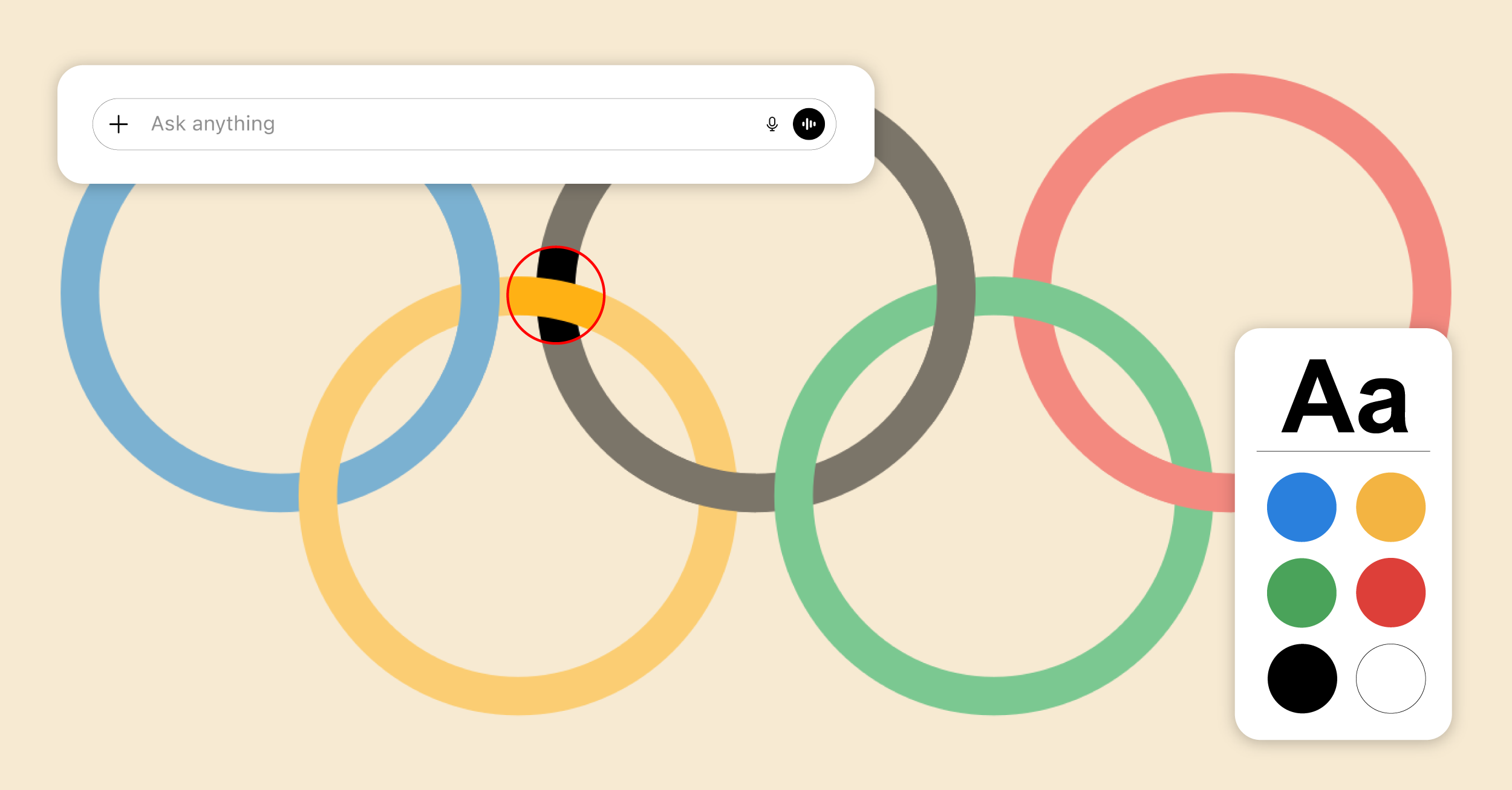
Eagle-eyed viewers quickly spotted the issue: the yellow and black rings appeared disconnected. Per the brand guidelines, the rings must always be fully interlinked—never altered, recolored, or re-created. Here, they appeared to be AI-generated rather than pulled from official artwork.
This wasn’t the Games’ first AI controversy. It followed closely on the heels of the opening ceremony itself, which featured an AI-generated animation. The reaction to the animation was swift and fierce:

AI has genuine, exciting applications in design work. Used thoughtfully, it extends designers’ capabilities without replacing them.
But the key word is thoughtfully. What we saw at the 2026 Winter Games was AI used as a shortcut, bypassing human artists who would have brought care and consideration to their design choices. In doing so, they broke their own rules.
For those of us in marketing and design, there is a clear lesson here. The pressure to move fast and produce more is real, and AI tools can help. But the Olympics offers a cautionary reminder of what gets lost in that trade-off: brand integrity, creative accountability, and audience trust.
The question isn’t whether to use AI—it’s whether the work that emerges still reflects the standards we’re expected to uphold.